Ambient / Experimental
Top 100 Chart Placements
Updated 8 hours ago
-
 #81
Feat. Staff Picks in Ambient / Experimental
#81
Feat. Staff Picks in Ambient / Experimental
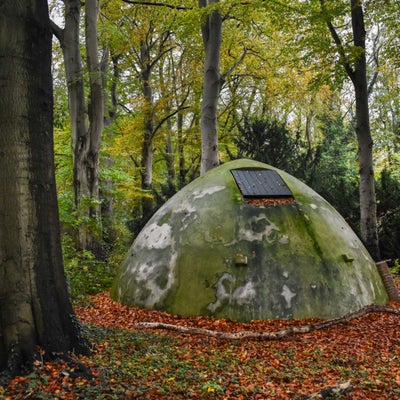
Dave Huismans (ex_libris, A Made Up Sound) presents In Transit, a self-titled LP of arresting downtempo vignettes, with origins dating back to over a decade ago. Renowned for some of this centurys most notorious rhythmic advances, the work of Dave Huismans (fka A Made Up Sound and 2562) continues to provide a blueprint for new generations of innovation-obsessives. After a long hiatus from releasing original material, he returned in 2025 with two beloved EPs as ex_libris. Now he returns to FELT as In Transit, following up on his remix of Civilistjavel! from 2023. Borrowing its name from the closing dialogue of a novel by Dutch author Hella S. Haasse, In Transit was written in just two weeks in the summer of 2013 on a Korg ESX sampler. Since then, he has patiently refined its constituent parts: When I sat down for those first drafts, the sole purpose was to make something slow-paced and without any clear timestamp, just for my own enjoyment. Soon after, I kind of forgot about them; I didnt think anyone else would be interested. But having recorded the loops just in case, I found myself returning to them every now and then, often as a pastime on long train rides, tinkering away at their arrangements and losing track of time. Somehow it took me twelve years to figure out that if I still havent tired of them myself by now, they might actually be worth releasing. Over the course of 38 minutes across six tracks, In Transit maps out an absorbing vista. The music shimmers with a celestial quality, underpinned by rhythmic stamina and creeping intensity. Tangential to Huismans previous work, the beats here are decentred and further scattered, acting as buoys to the constantly evolving and intricate narratives of layered textures. In Transit marks a fascinating new addition to Huismans sprawling catalogue, a truly remarkable racket to be crafted with such humble means, finding a suitable context within FELTs continued venture into parallel sounds.

-
 #82
Feat. Staff Picks in Ambient / Experimental
#82
Feat. Staff Picks in Ambient / Experimental
-
 #83
Feat. Staff Picks in Ambient / Experimental
#83
Feat. Staff Picks in Ambient / Experimental
-
 #84
Feat. Staff Picks in Ambient / Experimental
#84
Feat. Staff Picks in Ambient / Experimental
CxBxT is a new collaborative project consisting of Japanese singer, songwriter, and filmmaker Tujiko Noriko, musician and composer Adrian Corker, and percussionist George Barton. Stepping into the studio for the first time together one beautiful summers day in London 2024, the emerging six tracks that form new album .After, were recorded in a day and a half. Primarily recorded live with multiple mics and chains of effects by Ben Lockett, the improvised music came out of instruments which were already in the studio including bass, guitar, shakuhachi, piano, melodica, percussion, various synths and sounds played off acetates. Barton played tuned percussion, drums and musical saw with Corker adding fields recordings made with sound recordist Chris Watson and Tujiko adding vocals. Sounding like a modernised Bauhaus, taking in loose dub influences, Japanese folk music and krautwork, .After is a thrilling journey into experimental post-punk and electronic music. Corker first met Tujiko when he co-founded the Constructive label in 2020, and released the OST for the British film Surge starring Ben Whishaw, written by Tujiko and eminent British sound designer Paul Davies. It was our first time making music together and there was no plan, adds Tujiko. Most of the tracks were built from the first take but we recorded the tracks layer by layer, listening carefully to the sounds that were already there. It wasnt like doing an improvised live session where everyone just plays together. It was something more quieter and nuanced. For Aurora Sagashi, Corker built the track around harmonium, strings and Tujikos lo-fi vocals with Barton adding percussion. It was the first time in my music-making life that a project came together like this. I think the way we made this record reflects Adrians simplicity – the kind that comes from his ability to grasp the essence probably intuitively. Im kind of intuitive too, and….its just chaos, continues Tujiko. Ben was also a truly huge part of the album. He created such a beautiful and open sonic space – without Ben, we would have just been tangled up in cables, far from being focused or intuitive. I remember him using the word magic several times during the recording. I hope theres a little bit of that magic in this record to share. Tujiko Noriko is a Japanese singer, songwriter, and filmmaker based in Paris. Since the early 2000s, she has released several albums of experimental pop, singing bittersweet melodies in Japanese and English over glitchy, downtempo electronics and electro-acoustic arrangements. Early releases such as Shojo Toshi (2001) and From Tokyo to Naiagara (2003) were critically acclaimed, attracting attention from IDM and indie pop audiences alike. She has collaborated with several experimental electronic musicians, including Peter Pita Rehberg as DACM, French artist Saâdane Afif and Lawrence English and John Chantler on U (2008). Having worked on numerous experimental short films throughout her career, Tujiko released her first full-length instrumental soundtrack Kuro in 2019. The expansive ambient work Crépuscule I & II was released in 2023 which Pitchfork described as intimate yet cinematic. Adrian Corker is a musician and composer who has written extensively to picture, alongside releasing music both as a solo artist and in collaboration. His first score, Antonia Birds cult classic Face (1998) starred Robert Carlyle and Ray Winstone and most recently, he scored Rowan Joffes drama series Tin Star (Sky Atlantic/Amazon). Other notable film scores include Three Degrees Colder (2006), The Have-Nots (2016) and Florian Hoffmeisters Tár (2023). In summer 2023, he completed an installation for Modes 2023 Tokyo Festival in collaboration with Japanese film composer Takuma Watanabe. The same year, he curated a project titled Utopia or Oblivion based on the work of Buckminster Fuller, featuring work from Ale Hop, Robert Lippok and Silvia Kastel. He has also curated events at the ICA London, Unsound Festival and the Gagosian Gallery. Recent curation includes Chris Watsons Namib in the Octagon at Queen Mary in London. He has released numerous albums as a solo artist including his 2022 album Since it Turned Out Something Else, which was described by Electronic Sound Magazine as Intensely and startlingly brilliant. His final season score for Tin Star came second in Mojo Magazines Soundtrack of the Year, pipped only by Warren Ellis. He has collaborated with musicians including Chris Watson, Jack Wyllie and Richard Skelton. Corker also runs the groundbreaking labels SN Variations and Constructive which together have released music by John Cage, Lucy Railton, Kit Downes, Oliver Leith, Takuma Watanabe, conductor/composer Jack Sheen and most recently, Tujiko Noriko and sound designer Paul Davies score to Aneil Karias debut feature Surge starring Ben Whishaw. Percussionist George Barton has been described by BBC Radio 3s Tom Service as a boundless musical explorer, and regularly works in the fields of chamber music, solo playing, film sessions, free improvisation, and orchestral work, as well as arranging and conducting. With pianist Siwan Rhys, Barton forms GBSR Duo, whose repertoire ranges from Stockhausen and Ustvolskaya to Aphex Twin and Harold Budd, and whose collaborators range from the LA Philharmonic to experimental artists Angharad Davies and CHAINES. In 2025 GBSR Duo won the Royal Philharmonic Societys Young Artist Award. He is also a member of both the Colin Currie Group and Riot Ensemble.
-
 #85
Feat. Staff Picks in Ambient / Experimental
#85
Feat. Staff Picks in Ambient / Experimental
w/ The Producers
Mala , Paul St. Hilaire , DJ G , Aurora Halal , Cousin , Priori , Shinichi Atobe , Batu , Azu Tiwaline , Gavsborg , Russell E.L. Butler
Staff Picks
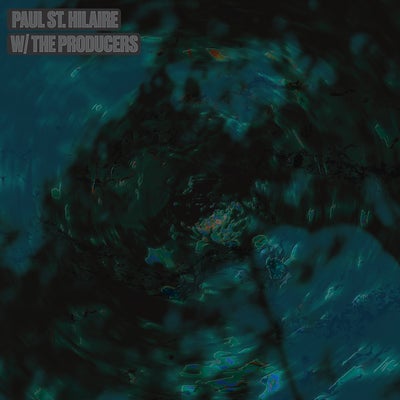
Legendary dub techno artist Paul St. Hilaire (AKA Tikiman) announces new collaborative album, marking 10 years of Kynant Records. Building on the success of Paul St. Hilaires landmark solo album for Kynant in 2023, w/ The Producers switches up the formula to pair St. Hilaire with a different producer on each track. Referencing fellow dub techno pioneers Mark Ernestus & Moritz von Oswalds acclaimed album w/ The Artists as Rhythm & Sound, St. Hilaire flips the concept to feature as the lone vocalist. Over the albums nine tracks, St. Hilaire offers a range of conscious song-writing and headtop musings, such as the spoken-word dread of Whats This or the sparse call-to-action of Send Them On. w/ The Producers is yet another essential record in St. Hilaires unmatched discography. The album marks 10 years of Kynant Records, with label owner Richard Akingbehin curating an eclectic but sonically connected group of producers. These include luminaries such as Digital Mystikz boss and dubstep trailblazer Mala, or the elusive Chain Reaction artist Shinichi Atobe. They sit alongside some of the most exciting names in recent electronic music - Batu, Gavsborg, Azu Tiwaline, Priori, Cousin, Russell E.L. Butler, Aurora Halal and DJ G - all of whom bring different elements of dub techno into their productions. w/ The Producers finds Kynant Records bridging the original voice of dub techno with the genres new wave. Its a statement of intent from the label, which began 10 years ago with deep, hypnotic techno and has veered gradually towards more dubwise sounds.
-
 #86
Feat. Staff Picks in Ambient / Experimental
#86
Feat. Staff Picks in Ambient / Experimental
-
 #87
Feat. Staff Picks in Ambient / Experimental
#87
Feat. Staff Picks in Ambient / Experimental
-
 #88
Feat. Staff Picks in Ambient / Experimental
#88
Feat. Staff Picks in Ambient / Experimental
Dancin' In The Streets
Adam Sinclaire , Rat Heart , Cansu Kandemir , Tha Payne , Ruby Conner , Juan Camilo
Staff Picks
-
 #89
Feat. Staff Picks in Ambient / Experimental
#89
Feat. Staff Picks in Ambient / Experimental
-
 #90
Feat. Staff Picks in Ambient / Experimental
#90
Feat. Staff Picks in Ambient / Experimental
-
 #91
Feat. Staff Picks in Ambient / Experimental
#91
Feat. Staff Picks in Ambient / Experimental
TD10
Shalt , Atrice , Batu , Ayesha , re:ni , Lechuga Zafiro , Bambounou , Skee Mask , Pearson Sound , Jabes , Koi , Duckett , Polygonia , El irreal Veintiuno , Jurango , Yushh , Daisy Moon , Marco Shuttle , Minor Science , Lurka , JASSS , 33emybw , Metrist , BadSista , Verraco
Staff Picks
-
 #92
Feat. Staff Picks in Ambient / Experimental
#92
Feat. Staff Picks in Ambient / Experimental
-
 #93
Feat. Staff Picks in Ambient / Experimental
#93
Feat. Staff Picks in Ambient / Experimental
Input (the Sofia Versions)
Stefan Goldmann , Lukas Tobiassen , Ensemble 180° , Daniel Chernov , Adrian Pavlov
Staff Picks
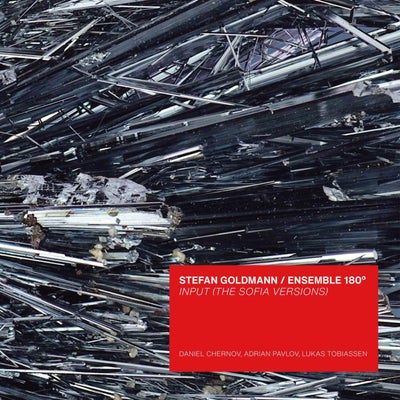
Stefan Goldmanns Input translates electronic music into formats for human players of acoustic instruments. The standard remix process is thus inverted, by providing the electronics first. Then composers backwards- engineer what they hear into scores for ensemble. The original, synthesized version isnt available for the audience: Its hidden shape can only be guessed at through its acoustic translations. By collaborating with multiple composers, the process of direct auditory comparison allows for multidimensional insights. It reveals common traits in unlikely places and highlights differences between individual approaches. Ambiguities of sound/score relations, emergent parallelisms and unexpected congruencies become part of the sensory and cognitive experience. The three versions in this release - by Daniel Chernov, Adrian Pavlov and Lukas Tobiassen - were recorded at Sofias 180 Degrees Festival and performed by the stellar group of musicians from Bulgaria, France and Switzerland which came together in Ensemble 180°. The pristine live recordings were further processed by Stefan Goldmann and now represent a stunning sonic hall of mirrors, with multiple vectors of transformation embedded in this dialogue.
-
 #94
Feat. Staff Picks in Ambient / Experimental
#94
Feat. Staff Picks in Ambient / Experimental
-
 #95
Feat. Staff Picks in Ambient / Experimental
#95
Feat. Staff Picks in Ambient / Experimental
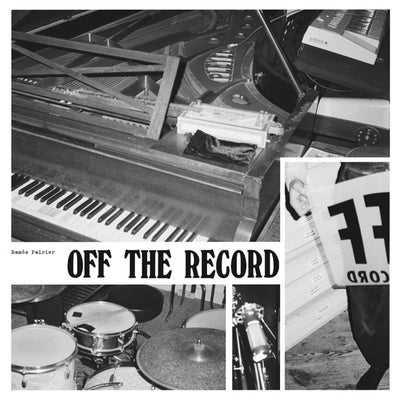
Off The Record (faitiche 39), the new album by French collagist Roméo Poirier, is an amusing romp through the discarded history of recording studios. It contains fourteen miniatures based on accidental recordings of studio talk, revealing things that were never meant for the public: we hear instructions from studio staff, scraps of talk between musicians, or just microphones being adjusted, as well as false notes, false starts: everyone stops. Start again: 1, 2, 3, 4! Poiriers approach recalls Accumulation, an artform practiced by Arman, Jean Tinguely and Daniel Spoerri that involved piling up everyday items into assemblages. The objects themselves often remained unaltered, the artistic gesture consisting in the careful curating of a distinctive selection. Poiriers audio collages explore similar terrain. The fourteen pieces on Off the Record combine more than a thousand found sounds from studio archives into complex miniatures. The audio content of these outtakes is twisted, stretched, cut, reassembled, slowed down and accelerated. Voices cut into a microgroove, from a very old recording, intertwine with digital voices gleaned from YouTube. All of them in dialogue, engaging the listener with the impression of being part of a new music group. Poirier uses the mundane routine of setting up before the actual recording gets underway to tell a universal story about working in a recording studio. And he manages something few achieve, transforming specialist knowledge into a narrative whose beauty goes far beyond its immediate subject. It speaks to everyone, because the story is told in a musical language that is open and accessible, evoking magical images reminiscent of Oz – a world consisting less of events than of camp hallucinations, captured in grainy black-and-white photographs. En passant, Poirier shows us how the notion of material accumulation can produce great art. Written and produced by Roméo Poirier, mastered by Stephan Mathieu, photos by Roméo Poirier, graphic design by Tim Tetzner.
-
 #96
Feat. Staff Picks in Ambient / Experimental
#96
Feat. Staff Picks in Ambient / Experimental
A Rhythm Protects One
Conny Slipp , Scarletina , Cleo , Call Super , Louis Lupin , Ondo Fudd , Clam1 , Malgo and KVS , eye gritt , DJ Flowerdew
Staff Picks
New album by Call Super for Dekmantel, honouring the classic mix CD format with 12 exclusive tracks all produced by Call Super using different monikers. Call Super revives the endangered art of the mix CD with a fluid, technicolour hour of elegantly advanced club music featuring a striking assembly of emergent artists. Since their first releases in the early 2010s, Joseph Seaton has been a many-sided artist balancing expressive electronics with organic instrumentation. Their background in jazz has informed ambient and experimental albums, but theyve proven to be just as comfortable tackling all shapes and speeds of impactful club music. This extends to their practice as a DJ, regularly surfing the slipstream of the club and festival circuit with a sensitive, seductive instinct for the movement of a dancefloor. Seaton set out to make ARPO an acronym for A Rhythm Protects One to honour the meaning of mix CDs in a world drowning in online DJ streams. Part of the generation raised on seminal series like the metal-tinned fabric and fabriclive (which Seaton themselves contributed to), they cast back to the lasting impression of landmark sessions like Coldcuts 1995 opus Journeys By DJ: 70 Minutes Of Madness. These were mixes to absorb over and over again, where every deeply considered track and transition became lodged in your psyche. As a DJ, producer and composer with a reputation for distinctive, head-turning musicality, Seaton puzzled out a selection for ARPO that bristles with invention. Every track feels like a moment, loaded with motifs and loops that gently impose their presence across an ever-shifting, intricately woven tapestry of dancefloor psychedelia (not to be confused with any genres with psy in the name). As well as exclusive new material under their Call Super and Ondo Fudd aliases, Seaton uses multiple new monikers to present their creative vision. In terms of slinky 4/4 groove and mid tempo pace, you might locate the likes of Conny Slipp, Scarletina and Clam1 on the wilder fringes of minimal tech house, but their productions teem with textural depth and melodic subtlety that reach past that scenes typically functional tendencies. Curveballs abound, and Seaton relishes in the chance to divert into dramatic workouts like their own Limelight and Mothertime or strip everything down for the striking, swooning poetry of Malgo & KVS The Argosy. Way beyond neatly boxed-off club styles, the individual tracks have their own unique qualities that hold space within the mix as a whole memorable hooks that burrow in deep, sequenced as a complete and immersive whole to carry with you through life. As Seaton puts it themselves: There is a line in the Malgo & KVS track that goes, I must be the place where the storm catches breath. The line captures that feeling of the best of times in a club, where everything slips away in terms of time and you feel like youve reached a place beyond the outside world, a place of your own that is somehow communal with those around you. The mix was meant to be an honest reflection of those moments for me as a DJ. The zones that somehow encapsulate the physical and mental harmony you feel in that place. This is a mix for that zone.
-
 #97
Feat. Staff Picks in Ambient / Experimental
#97
Feat. Staff Picks in Ambient / Experimental
-
 #98
Feat. Staff Picks in Ambient / Experimental
#98
Feat. Staff Picks in Ambient / Experimental
-
 #99
Feat. Staff Picks in Ambient / Experimental
#99
Feat. Staff Picks in Ambient / Experimental
-
 #100
Feat. Staff Picks in Ambient / Experimental
#100
Feat. Staff Picks in Ambient / Experimental
Welcome to Pfefferkorn: a countryside studio hidden inside a former 1950s café. The stylish interior stayed, the cake display is gone, but the mountain panorama is still very much in place. Out of this unlikely combination cameObsolescence,Featers new album and a record that wasnt supposed to happen, but insisted on doing so anyway.Originally, Pfefferkorn hosted a merry-go-round of guests and genres: jazz, kraut, pop, experiments, even the occasional field recording. Among the many, Mara Oldofredi aka Mietze Conte became the most frequent and inspiring visitor. Their sessions set sparks, and one of them, Trio, landed directly on the album.The method? Call it instant archaeology: live jams on two-track tape, then pushed through edits, resampling, Fairlight IIX sorcery, and endless tape-laptop relays. Quick, raw, and without too much overthinking, more sketch than sculpture, more instinct than intent.The result isObsolescence,a record born out of detours, made for personal delight, and proof that side products can be main courses if you let them.
 Staff Picks