Traum
Top 100 Chart Placements
Updated 2 years ago
-
 #76
Feat. Staff Picks in Electronica
#76
Feat. Staff Picks in Electronica
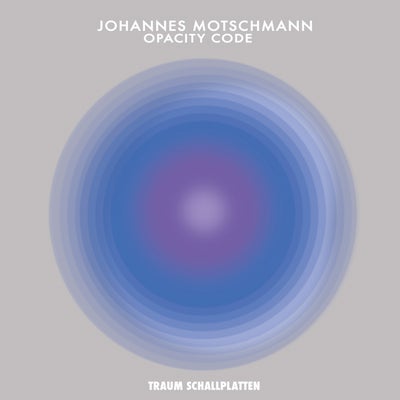
Johannes Motschmann combines classical compositional craft with a distinctive electronic voice. His work spans ambient soundscapes, experimental live electronics, and AI-assisted composition (referring only to AION2 written with the Software he had developed himself at German national radio station SWR), always shaped by his background in piano and contemporary music. Alongside his orchestral and chamber works, Motschmann has released several acclaimed electronic albums that highlight this unique fusion: Electric Fields (2016) electro-acoustic landscapes blending analog synths and piano Lifestream (2019) handcrafted electronica performed without loops or samples AION 2 (2022) an exploration of artificial intelligence as a co-composer His upcoming solo EP on Traum continues this trajectory, putting the focus firmly on his electronic side while carrying forward his deep compositional sensibility. With his Opacity Code release, Johannes Motchmann explores the interplay between clarity and obscurity in sound. By layering acoustic and electronic elements like an orchestra, he creates textures where transparency and masking coexist, leading to both intentional and accidental new soundscapes. Quote from Johannes Motschmann: Lately Ive been working a lot with acoustic instruments and somehow I always have a naturalistic and also a bit retrospective sound in mind for the electronic music I make. I always mix all kinds of synths until I get a mixed sound similar to an orchestra, where you dont always know immediately which instruments are involved when you first hear it. Just as in painting where you get many new colors by mixing the basic colors, I also proceed in arranging and mixing new tracks. Many factors determine whether an element becomes audible at all: the volume, the frequencies, the environment, everything influences each other. So when I try to make everything transparent and make the sounds shine, there is sometimes the exact opposite effect of too many layers masking each other. It can be annoying sometimes but as a side effect this often results in new soundscapes, some of which were perhaps not even planned. While working on Opacity Code, I was really looking for moments like this, so that in addition to passages of complete clarity, there are also episodes of only mysterious impression, so that you can feel how behind all the soundscapes there are still other levels that you can gradually track down.

 Staff Picks