
Atlantic Progression
Top 100 Chart Placements
Updated 4 days ago
-
 #36
Feat. Hype in Progressive House
#36
Feat. Hype in Progressive House
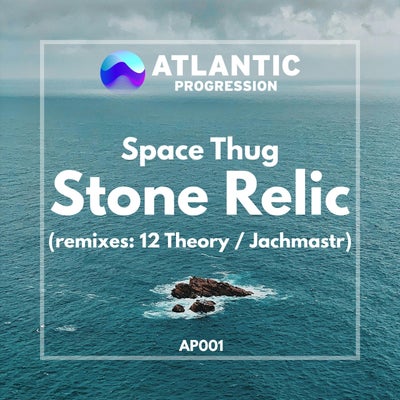
Original Mix: It starts in a haze. Not the soft kind—the kind that feels engineered, like someone dialed in the exact frequency of disorientation and let it hover there for two full phrases. You sit in it just long enough to forget where the floor is. Then some arpeggiated signal starts flickering through the fog—mechanical, hypnotic—like a warning light you can't quite place. And then it drops. No ceremony. No countdown. Just straight into the gut. The bassline hits first—thick, unapologetic, right up against your ribs—and suddenly you're locked into it whether you agreed to be or not. The kick follows with a kind of precision that feels less like rhythm and more like enforcement. At that point, it's obvious: this is breaks. Progressive, yes—but not polite about it. The whole thing moves like a machine built for distance. Not speed—distance. The groove digs in and stays there, steady and relentless, while the atmospheres swell and collapse around it like heat waves off desert asphalt. Everything is wide, stretched out, breathing, but somehow still pinned exactly where it needs to be. No wasted motion. No loose ends. There's a strange clarity in it. The kind you get halfway through a long drive when the road stops feeling real and the music is the only thing keeping you oriented. "Stone Relic" doesn't ask for attention—it assumes it. And once you're in it, there's no clean exit. You ride it out or you don't. 12 Theory Remix: The breaks are gone. Stripped out completely—replaced with a four-on-the-floor pulse that feels less like a transition and more like a change in altitude. Different air up here. Thinner. Sharper. Right away, there's a voice in the background—not front and center, not begging for attention—but looping, chanting, like something pulled out of an early 2000s afterhours memory and reassembled with cleaner edges. It lingers just behind the groove, enough to haunt it without ever dominating. And the groove is the thing. It locks in early and doesn't let go. A low-end that growls instead of punches—steady, controlled, pulling you forward like it already knows where this is headed. No hesitation in it. Then the synth arrives. Not explosive—inevitable. It slides into place and suddenly the entire track has direction. There's a dialogue happening in the top end—call and response, tension and release—but it never turns theatrical. It stays focused. Measured. Everything sits exactly where it should. Wide where it needs to breathe, centered where it needs weight. No clutter. No excess. 12 Theory doesn't rework "Stone Relic." He reframes it. Same core material, different gravity. And once it settles in, you realize this one isn't trying to take you somewhere new. It's trying to hold you there. Jachmastr Remix: No slow entry. No easing in. It cuts straight to the point—filtered bassline already in motion, drums snapping into place like the system's been running long before you arrived. Kick, snare, hats, shakers—everything aligned early, already speaking the language. It's four-on-the-floor again, but this time it leans into something older. Not nostalgic in a soft way—more like a direct line back to the architecture of progressive house when it was still being defined in real time. You can hear it in the movement. In the way the groove doesn't just sit—it drives. The low end carries weight, but it's controlled. Rolling, steady, built for tension rather than release alone. Around it, small details flicker in and out—transitional textures, bits of ear candy that guide the track forward without ever stepping into the spotlight. Everything feels placed with intent. Then the synth starts to surface. Dark, gradual, almost leaking into the mix rather than arriving cleanly. It expands over time, pulling the track into a deeper space without breaking the momentum. By the time it fully reveals itself, the direction is locked. The breakdown stretches. Long enough to matter. Enough room to build pressure, to layer, to work it into something larger without losing the thread. It doesn't overstay—it just gives you space to operate before tightening everything back into the drop. Jachmastr doesn't just reinterpret "Stone Relic." He rebuilds it with a different blueprint—one that understands the floor, and leaves room for those who know what to do with it.

 Hype
Hype