
Coby Sey
Top 100 Chart Placements
Updated 2 years ago
-
 #10
Top Releases in Electro (Classic / Detroit / Modern)
#10
Top Releases in Electro (Classic / Detroit / Modern)
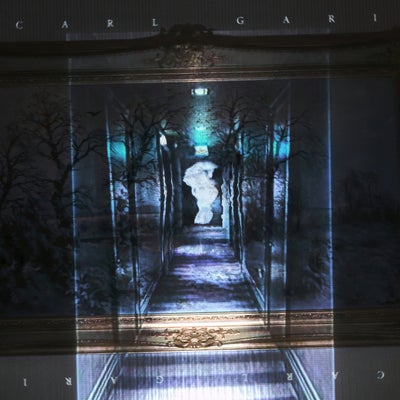
In the seclusion of a house in the Bavarian Forest, something unfolded that felt less like a conventional album production and more like an internal process of condensation. This house wasn't a studio - it was a retreat. Its 1960s-inspired interiors, creaking wooden stairs, and crackling fireplace shaped the sound of Carl Gari as much as the instruments themselves. Though the house no longer exists, its atmosphere remains present in the recordings. The music of Carl Gari - Jonas Yamer, Till Funke, and Jonas Friedlich - resists easy categorization, a trait that continues on this monumental new album. From the friction between electronic music and guitar textures, the trio forges a distinctive, idiosyncratic sound. Distorted electric guitars and pulsating basslines intertwine with analog drum machines, tape delays, and intricate effect chains, creating music that is raw, organic, and psychedelic. A new element on the album is the trio's first use of vocals: Jonas Yamer, usually on bass, raises his voice in a punk-tinged, invented language that hints rather than narrates, unsettling more than it explains. The guest artists do not merely decorate the sound - they alter its very structure at critical points. Polygonia contributes layered vocals that mesh seamlessly with the album's technoid architecture. Will Brooks of Dälek delivers a dark rap feature on 'Poison Shyness (Anti-Social)', his words carving the sonic space with precision. Coby Sey adds introspective vocals that hover between experimentation and restraint on 'Inner Link'. New York rap pioneer Sensational introduces a deliberately rough, individual counterpoint on 'Disco Lights', while the German percussionist Simon Popp drives the album forward with an uncompromising drum performance that insists rather than accompanies on 'Zeitesser'. The cover photographs, taken by Jonas Yamer, project images of corridors onto paintings located in the now demolished house where the album was recorded. Visually, this reflects a key motif of the album: spaces exist only as overlays and echoes - not mystical ghosts, but traces of a place that has physically vanished.

-
 #25
Top Releases in Bass / Club
#25
Top Releases in Bass / Club
Azu Tiwaline & Cinna Peyghamy, Amotik, Quelza, and Alarico remix four tracks from Ben Klock and Fadi Mohems collaborative album Layer One. Released last year on the pairs label LAYER, each artist on the Layer One Remixes EP retains the weighty, low-end edge that shaped the album, while reinterpreting four tracks through a myriad of techno, IDM, bass, and experimental shades. Honouring the conceptual direction of Layer One, which delved into a post-human world and offered a serene reflection on a realm that continued to flourish in the absence of humanity, the Layer One Remixes EP echoes the same theme. The remaining human survivors on Earth signal a remembrance of their sensibilities, told through the powerful lyrics and vocals of grime MC Flowdan and interdisciplinary artist Coby Sey. Azu Tiwaline & Cinna Peyghamy open the EP with their remix of Our Sector featuring the commanding vocals of Flowdan. Fragmented bass-driven textures skitter across the sparse soundscape, culminating in a track primed for the weirder hours of the night. On Ultimately, Amotik delivers his take on the original featuring spoken word by Coby Sey, and whips up a rolling four-four number pierced with bleepy percussion. On the flip, Quelzas reinterpretation of Our Sector unfolds with zappy motifs and technoid flourishes, permeating the shadowy pads and spine-chilling harmonics that slink through the atmosphere. Alarico remixes Clean Slate, serving a potent techno track laced with equal parts restraint and release, enhanced by Coby Seys taut vocals. While the original album represented the more exploratory sides of Ben Klock and Fadi Mohem, the Layer One Remixes EP offers a further step into the void, led by five contemporary artists who are unafraid to delve into the murkiest corners of the dystopian world conjured up by Klock and Mohem.
-
#41
Top Releases in 140 / Deep Dubstep / Grime
Azu Tiwaline & Cinna Peyghamy, Amotik, Quelza, and Alarico remix four tracks from Ben Klock and Fadi Mohems collaborative album Layer One. Released last year on the pairs label LAYER, each artist on the Layer One Remixes EP retains the weighty, low-end edge that shaped the album, while reinterpreting four tracks through a myriad of techno, IDM, bass, and experimental shades. Honouring the conceptual direction of Layer One, which delved into a post-human world and offered a serene reflection on a realm that continued to flourish in the absence of humanity, the Layer One Remixes EP echoes the same theme. The remaining human survivors on Earth signal a remembrance of their sensibilities, told through the powerful lyrics and vocals of grime MC Flowdan and interdisciplinary artist Coby Sey. Azu Tiwaline & Cinna Peyghamy open the EP with their remix of Our Sector featuring the commanding vocals of Flowdan. Fragmented bass-driven textures skitter across the sparse soundscape, culminating in a track primed for the weirder hours of the night. On Ultimately, Amotik delivers his take on the original featuring spoken word by Coby Sey, and whips up a rolling four-four number pierced with bleepy percussion. On the flip, Quelzas reinterpretation of Our Sector unfolds with zappy motifs and technoid flourishes, permeating the shadowy pads and spine-chilling harmonics that slink through the atmosphere. Alarico remixes Clean Slate, serving a potent techno track laced with equal parts restraint and release, enhanced by Coby Seys taut vocals. While the original album represented the more exploratory sides of Ben Klock and Fadi Mohem, the Layer One Remixes EP offers a further step into the void, led by five contemporary artists who are unafraid to delve into the murkiest corners of the dystopian world conjured up by Klock and Mohem.
-
#48
Top Releases in Electronica
In the seclusion of a house in the Bavarian Forest, something unfolded that felt less like a conventional album production and more like an internal process of condensation. This house wasn't a studio - it was a retreat. Its 1960s-inspired interiors, creaking wooden stairs, and crackling fireplace shaped the sound of Carl Gari as much as the instruments themselves. Though the house no longer exists, its atmosphere remains present in the recordings. The music of Carl Gari - Jonas Yamer, Till Funke, and Jonas Friedlich - resists easy categorization, a trait that continues on this monumental new album. From the friction between electronic music and guitar textures, the trio forges a distinctive, idiosyncratic sound. Distorted electric guitars and pulsating basslines intertwine with analog drum machines, tape delays, and intricate effect chains, creating music that is raw, organic, and psychedelic. A new element on the album is the trio's first use of vocals: Jonas Yamer, usually on bass, raises his voice in a punk-tinged, invented language that hints rather than narrates, unsettling more than it explains. The guest artists do not merely decorate the sound - they alter its very structure at critical points. Polygonia contributes layered vocals that mesh seamlessly with the album's technoid architecture. Will Brooks of Dälek delivers a dark rap feature on 'Poison Shyness (Anti-Social)', his words carving the sonic space with precision. Coby Sey adds introspective vocals that hover between experimentation and restraint on 'Inner Link'. New York rap pioneer Sensational introduces a deliberately rough, individual counterpoint on 'Disco Lights', while the German percussionist Simon Popp drives the album forward with an uncompromising drum performance that insists rather than accompanies on 'Zeitesser'. The cover photographs, taken by Jonas Yamer, project images of corridors onto paintings located in the now demolished house where the album was recorded. Visually, this reflects a key motif of the album: spaces exist only as overlays and echoes - not mystical ghosts, but traces of a place that has physically vanished.
 Top Releases